

Life is full of choices. Whether to remove a breast is a decision shaped by the cancer, but choosing whether to undergo reconstruction is completely up to you.
More than reconstruction, it’s about reclaiming YOURSELF.
It is a personal choice that restores not just physical form, but confidence, hope, and a sense of closure after cancer surgery.
Why is it important for us to talk about this?
In India, about 30% of cancers in women are breast cancers.
Breast cancer often occurs at a slightly younger age in Indian women compared to Western populations. Awareness about breast cancer and its treatment has improved over the years, but many people still know little about breast reconstruction and the support available for recovery and rehabilitation after treatment. It’s important that women in India undergoing mastectomies have access to the same standard of care provided in Western countries.
Understanding breast reconstruction
Breast reconstruction is a surgical procedure to rebuild the breast after it has been removed (mastectomy). Women having the entire breast removed are usually good candidates for full breast reconstruction.
- Immediate reconstruction can be done at the same time as the mastectomy.
- Delayed reconstruction can be performed a few months after the mastectomy, once healing is complete.
Who could consider breast reconstruction as an option?
- Suitable for most patients undergoing breast removal, unless significant medical conditions prevent it.
- Ideal for those with a positive outlook who are eager to return to their normal lifestyle after mastectomy.
- Breast reconstruction helps complete the rehabilitation process and reduces the ongoing emotional impact of cancer treatment by removing a constant reminder of the surgery.
- Breast reconstruction surgery can also be performed for aesthetic or cosmetic enhancement.This surgery can help restore or enhance the appearance of the breast, even beyond medical necessity.
How is the Breast Reconstructed?
There are several techniques for breast reconstruction :
- Flap reconstruction: Using tissue from the tummy, back, or thighs and moving it to the chest to recreate the breast.
- Implant reconstruction: Placing a gel implant under the skin. This may be done in one stage or two, depending on the breast shape and the condition of the skin.
Choosing the right option depends on many individual factors. Your plastic surgeon can help you understand these choices and recommend the approach that best suits your needs and goals.
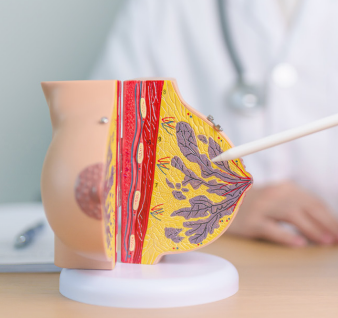
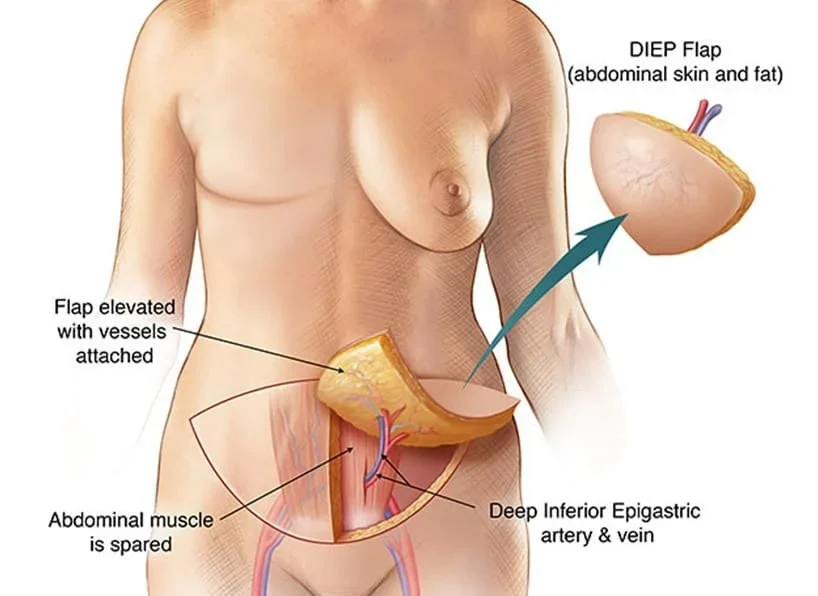
Flap Reconstruction
Today, the preferred approach to breast reconstruction is to use the woman’s own natural fat, usually taken from the abdomen. This is done through delicate microsurgery.
The procedure is often performed at the same time as the mastectomy. While the cancer surgeon carefully removes the breast tissue, the plastic surgeon gently prepares the fat from the abdomen. Once the mastectomy is complete, the plastic surgeon smoothly shapes and places this tissue under the skin to recreate the breast, completing the reconstruction with fine micro-surgical techniques.
In a typical single-side reconstruction, this adds about two extra hours to the surgery. This technique, known as the DIEP flap, offers a long-lasting reconstruction because it uses the patient’s own tissue. It changes naturally over time, aging and adjusting with the body’s normal weight fluctuations. The result looks and feels natural.
Implant-based breast reconstruction
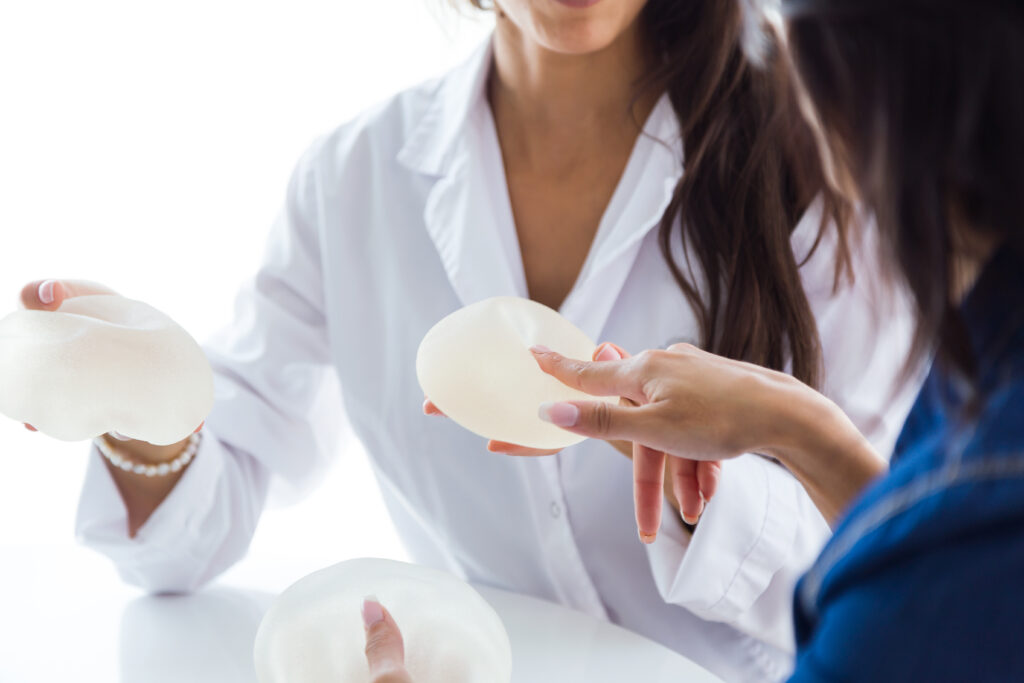
For women who do not have enough fat in other parts of the body, the breast can be reconstructed using a silicone implant, similar to those used for cosmetic breast enhancement. These implants are considered very safe.
- For larger breasts: Reconstruction is usually done in two steps—first an expander is placed, and a few months later, it is replaced with a permanent implant.
- For smaller breasts: The reconstruction can often be done in a single step.
Implant reconstruction is generally a quicker operation compared to using your own tissue. However, implants may require additional surgeries over the years to maintain the result, especially if radiation therapy is needed. The reconstructed breast may feel firmer than a natural breast, and the appearance may be less natural compared to tissue-based reconstruction.
Your Recovery Journey
Recovery After Breast Reconstruction
- Hospital Stay: 4 days
- Full Recovery, including returning to normal activities and physical exercise : 6 weeks (similar to mastectomy)
First 3 Days:
- Critical for tissue healing. Hospital stay is recommended.
- Shower from day 2
- Gentle walking encouraged
- Bed rest only for first 2 days
Weeks 1-2:
- Limit arm movements to allow healing
Weeks 3-4:
- Start gentle exercises to regain full range of motion
- Resume daily activities that don’t involve heavy lifting or stretching the arms fully
After 6 Weeks:
- Yoga, Pilates and gym activities can be resumed
While breast reconstruction is a longer operation than mastectomy alone, it does not add significant risk to overall health, as the surgery involves only surface tissues.
It may add about two extra weeks to the full recovery time line compared to a mastectomy.
Caring for Yourself After Breast Reconstruction
Follow Your Doctor’s Advice
- Take medications as prescribed
- Attend all follow-up appointments
Wound Care
- Keep the area clean and dry
- Watch for redness, swelling, or discharge
Rest & Light Activity
- Rest well in the first few days
- Gentle walking is encouraged
- Avoid heavy lifting or straining
Arm & Shoulder Exercises
- Start gentle exercises as instructed
- Gradually regain full range of motion
Nutrition & Hydration
- Eat balanced meals
- Drink plenty of water
Emotional Well-being
- Talk to loved ones or support groups
- Consider counseling if needed
Lifestyle & Exercise
- Resume daily activities gradually
- Light exercises like yoga or walking after 4–6 weeks
Clothing & Comfort
- Wear loose, comfortable clothing
- Use soft or surgical bras as recommended
Debunking Common Myths About Breast Reconstruction
MYTH 1:
Breast reconstruction is a purely cosmetic procedure.
FACT
No, it is not. It is a correction of a deformity.
It is well recognised worldwide that breast reconstruction significantly improves quality of life and aids in psychosocial well being.
MYTH 2:
Reconstruction interferes with the cancer treatment.
FACT
No, the reconstruction is carefully coordinated so that cancer treatment continues without any delay.
Cancer treatment remains the top priority.
MYTH 3:
Reconstruction makes the cancer harder to detect.
FACT
There is no evidence that breast reconstruction makes it more difficult to detect recurrence of cancer.
FAQs
What does a reconstructed breast look like?
In most patients the reconstructed breast looks natural under clothing. By replacing a similar volume during reconstruction, there is usually no need for an external prosthesis. The cleavage appears near normal, allowing clothes to be worn without any adjustments.
How to decide which type of reconstruction is best?
If there are no medical restrictions, using the body’s own fat is usually the preferred option. When there is limited fat, an implant may be a suitable alternative. The best choice also depends on factors such as breast size and shape, skin quality, and whether radiation therapy will be needed.
Is it possible to have reconstruction after earlier breast removal?
Yes, reconstruction is possible even if the breast was removed earlier. This is called delayed reconstruction and can be done after completing cancer treatment. In such cases, skin from the abdomen, along with fat, is usually needed to recreate the breast.
Is the recovery likely to be very painful?
Surprisingly, recovery is usually quite manageable. Most patients who have had reconstruction report only mild discomfort. Pain relief is typically needed for just 2–3 days in the hospital, and simple medications like paracetamol or ibuprofen may be taken for about a week at home.